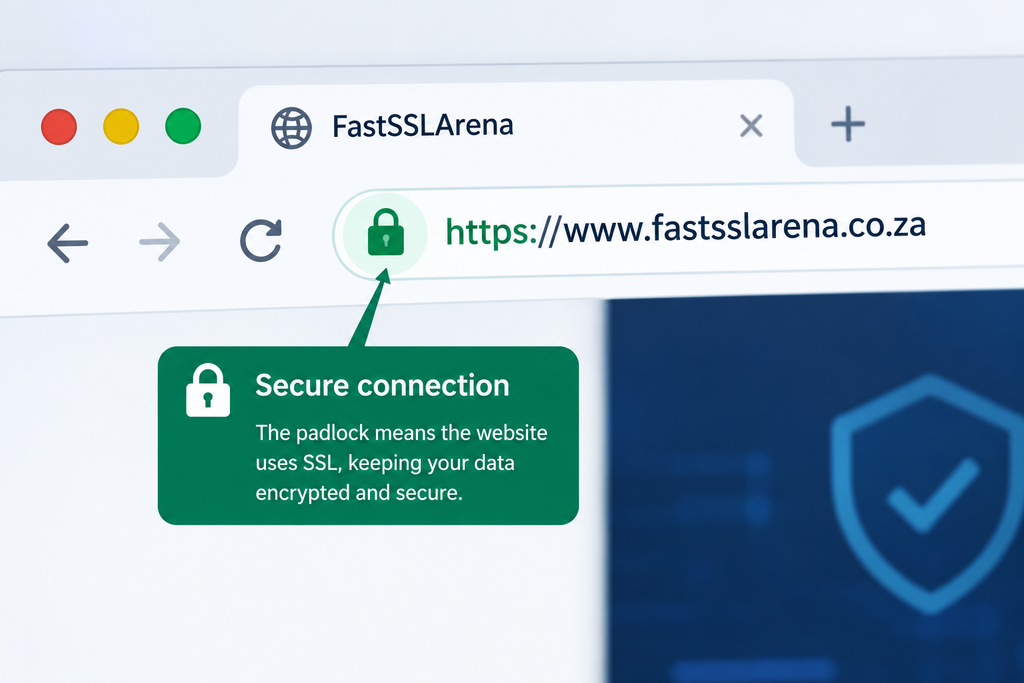
Look at your browser’s address bar. See that small padlock next to the web address? That padlock tells visitors your site is safe to use. Behind it sits an SSL certificate. So, what is SSL, and why does your business website need it? Let’s break it down.
What is SSL?
SSL (Secure Sockets Layer) is a security technology that encrypts the connection between a website and its visitors. In other words, it turns readable information, like passwords and card numbers, into scrambled code that only the intended recipient can unlock.
Think of it this way: sending data without SSL is like mailing a postcard. As a result, anyone who handles it along the way can read it. SSL, on the other hand, puts that message in a sealed, tamper-proof envelope.
An SSL certificate is the digital file that makes this possible. It does two jobs:
- Encrypts data so hackers can’t read or alter it in transit.
- Proves your identity so visitors know they’re on your real website, not a fake copy.
When a site has a valid certificate, its address starts with https:// instead of http://, and browsers show the padlock. Technically, the modern version is called TLS (Transport Layer Security), but most people still say SSL.
Why your business website needs an SSL certificate
SSL isn’t just for big online stores. In fact, any business with a website, from a local accounting firm to a growing retailer, benefits from it.
- It protects your customers. Contact forms, logins and payments all carry personal data. SSL keeps that data private and out of criminals’ hands.
- It builds trust. Without SSL, browsers like Chrome label your site “Not Secure”. Consequently, that warning drives visitors away before they read a word.
- It boosts your search ranking. Google uses HTTPS as a ranking signal. As a result, secure sites gain an edge over competitors still on http.
- It stops impersonation. In addition, higher-level certificates verify that your business is real, making it harder for scammers to pose as you.
- It helps you stay compliant. Data protection laws, such as South Africa’s POPIA, require businesses to safeguard personal information. SSL is therefore a basic, visible step towards that.
- It protects sales. Customers abandon checkouts they don’t trust. In contrast, the padlock reassures them that buying from you is safe.
In short, a website without SSL looks outdated, ranks lower and puts your customers at risk.
How FastSSLArena makes getting an SSL certificate simple
Getting an SSL certificate shouldn’t feel like a technical maze. FastSSLArena puts everything you need in one place, so you can secure your site in minutes, not days.
- Buy with confidence. Choose from the world’s most trusted SSL brands: DigiCert, Sectigo, Thawte, GeoTrust and RapidSSL.
- Renew without the hassle. Keep your certificate active and avoid sudden “Not Secure” warnings.
- Generate your CSR easily. Our tools help you create the Certificate Signing Request (CSR) your certificate needs, with no technical expertise required.
- Save with discounted pricing. Get premium protection at competitive rates.
- Find the right fit. Whether you run a single website or manage several domains, we help you pick the certificate that matches your needs and budget. Not sure where to start? Contact our team.
Now that you know what SSL is, there’s no reason to wait. Your customers deserve a safe experience, and your business deserves a website they trust.
Secure your site with FastSSLArena today.
Frequently asked questions about SSL
What is SSL used for?
SSL encrypts data shared between a website and its visitors, and it confirms the website is genuine. For example, it protects logins, forms and payments.
Is SSL the same as HTTPS?
Not quite. HTTPS is the secure version of a web address, and an SSL certificate is what enables it.
How do I know if my website has SSL?
First, check your browser’s address bar. If you see a padlock and your address starts with https://, your site has SSL.
How long does it take to get an SSL certificate?
A Domain Validated (DV) certificate can be issued within minutes. Organisation Validated (OV) and Extended Validation (EV) certificates, however, take longer, often a few days, because the certificate authority checks your business details.
Do SSL certificates expire?
Yes. Every certificate has a set lifespan, and industry rules keep shortening it. So renew on time to avoid “Not Secure” warnings.
What is a CSR?
A Certificate Signing Request (CSR) is a block of encoded text that holds your website and business details. You then submit it to get your SSL certificate issued.