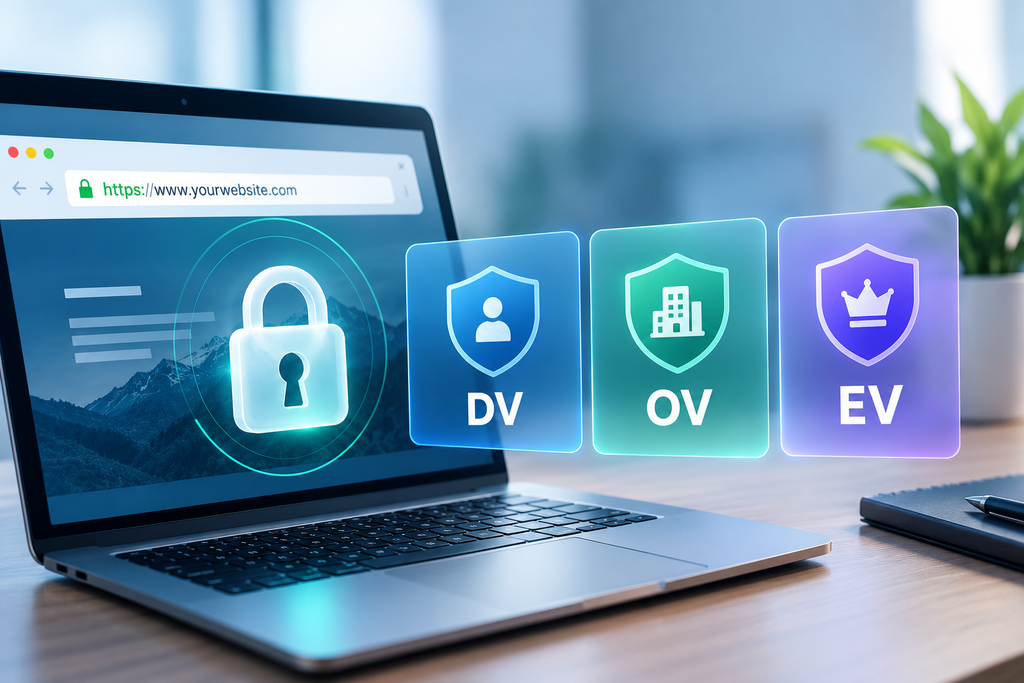
Shopping for an SSL certificate, you’ll quickly run into three acronyms: DV, OV and EV. They sound technical, but the idea behind them is simple. DV, OV and EV certificates all encrypt your website in the same way. The difference is the SSL validation level: how much the certificate authority (CA) checks about who you are.
Think of it like proving your identity. DV is showing you have the keys to a building. OV is proving your business is registered there. EV is a full background check. This guide explains each level, compares them side by side, and shows how FastSSLArena helps you pick and get the right one.
Why your SSL validation level matters
A padlock tells visitors their connection is encrypted. It doesn’t tell them who is on the other end.
Scammers know this. Basic certificates are quick and easy to get, so many phishing sites now show a padlock too. Higher validation levels tie your certificate to a real, verified business, which gives customers, partners and payment providers more reason to trust you.
Validation rules are set by the CA/Browser Forum, so every trusted CA follows the same standards. New to SSL? Start with our guide to what an SSL certificate is and why you need one.
DV (Domain Validated) certificates explained
A DV certificate is the most basic level. The CA only confirms that you control the domain.
- How it’s verified: by replying to an email sent to the domain, adding a DNS record, or uploading a file to your server.
- What the certificate shows: your domain name only, with no business details.
- Issue time: usually within minutes.
- Pros: fast, affordable and fully automated.
- Cons: no proof of who owns the website.
- Best for: blogs, portfolios, test sites and small websites that don’t collect sensitive data.
OV (Organisation Validated) certificates explained
An OV certificate adds a business identity check on top of domain control.
- How it’s verified: the CA confirms your domain, then checks that your organisation legally exists using official registers. In South Africa, that’s usually the CIPC. The CA may also verify your address and phone number.
- What the certificate shows: your organisation’s name and location, visible in the certificate details.
- Issue time: typically one to three business days.
- Pros: proves a real business is behind the site.
- Cons: takes longer and needs accurate company records.
- Best for: company websites, client portals, intranets and sites with logins or contact forms.
EV (Extended Validation) certificates explained
An EV certificate carries the strictest checks available.
- How it’s verified: the CA confirms your organisation’s legal, physical and operational existence, and checks that the person requesting the certificate is authorised to do so.
- What the certificate shows: your verified legal name, registration number and jurisdiction.
- Issue time: usually a few days, sometimes longer if documents need follow-up.
- Pros: the highest level of identity assurance, which deters impersonation.
- Cons: the most paperwork and the highest cost. EV certificates also can’t be issued as wildcards.
- Best for: banks, e-commerce stores, financial services and brands that scammers often imitate.
Note: browsers stopped showing the green address bar for EV in 2019. However, the verified company details remain in the certificate, and many regulated industries still prefer EV.
DV vs OV vs EV at a glance
| DV | OV | EV | |
| What’s verified | Domain control | Domain and organisation | Domain, organisation and operations |
| Business name in certificate | No | Yes | Yes, plus registration details |
| Paperwork | None | Some | Most |
| Issue time | Minutes | 1–3 days | Several days |
| Wildcard available | Yes | Yes | No |
| Relative cost | Lowest | Mid-range | Highest |
| Trust level | Basic | High | Highest |
| Encryption strength | Same | Same | Same |
How to check a website’s validation level
- Click the padlock icon in your browser’s address bar.
- Open the certificate details.
- Look at the “Subject” or “Issued to” section. If it shows only a domain, it’s DV. If it shows an organisation name, it’s OV or EV.
Which SSL validation level should you choose?
- Choose DV if you run a personal site, blog or simple brochure site with no logins or payments.
- Choose OV if you’re a registered business that collects customer details, offers logins or wants to show you’re legitimate.
- Choose EV if you handle payments or financial data, operate in a regulated industry, or need maximum protection against impersonation.
A simple rule: the more your customers trust you with, the higher the SSL validation level you need. Our SSL buyer’s guide covers the other factors to weigh before you buy.
How to prepare for OV and EV validation
Most delays come from mismatched or missing details. Get these ready before you order:
- Company registration details that exactly match your legal name, as listed with the CIPC or your country’s registry.
- A verifiable business address and phone number, ideally listed in a public business directory.
- Domain access so you can complete domain validation quickly.
- An authorised contact who can confirm the request, especially for EV.
Frequently asked questions about DV, OV and EV certificates
Is a DV certificate less secure than OV or EV?
No. All three use the same encryption. The difference is how much the CA verifies about the website owner.
Can individuals get OV or EV certificates?
No. OV and EV certificates are only issued to registered organisations. Individuals can use DV.
Why don’t browsers show the green bar for EV anymore?
Browsers removed it in 2019 because many users didn’t notice it. The verified business details still appear in the certificate.
Can I get an EV wildcard certificate?
No. Industry rules don’t allow EV wildcards. Use an EV multi-domain certificate or an OV wildcard instead.
Can I upgrade from DV to OV or EV later?
Yes. You can move to a higher SSL validation level at any time. The CA simply runs the extra checks before issuing your new certificate.
How FastSSLArena helps with DV, OV and EV certificates
Choosing a validation level is one thing. Getting through validation is another. FastSSLArena makes both easy.
- Help choosing the right level. Not sure whether you need DV, OV or EV? We’ll help you match the level to your website and budget.
- Every level, every top brand. Compare DV, OV and EV options from DigiCert, Sectigo, Thawte, GeoTrust and RapidSSL in one place.
- Validation made simple. We guide you through what each level needs, from domain checks to company documents, so your order doesn’t stall.
- Fast DV while you wait. Get a DV certificate within minutes to secure your site while OV or EV validation runs.
- Built-in CSR tool. Generate your CSR in a few clicks, no technical commands needed.
- Discounted pricing. Get premium validation at competitive rates.
Whatever SSL validation level your business needs, we’ll help you get there.
Find your DV, OV or EV certificate at FastSSLArena today